
Order Management
A customer can buy from several sellers in one checkout. Once the order is placed, it is split so that each seller sees and handles only their own products. This page covers how sellers work through their orders and what the admin sees.
How a marketplace order works
- The customer pays the store for the whole order.
- The order is split, one part for each seller whose products are in it.
- The store's commission is worked out for each product.
- Each seller invoices and ships their part.
- When their part is complete, the seller requests payment for it.
Your orders
Go to Sales >> Orders in the Seller Panel.
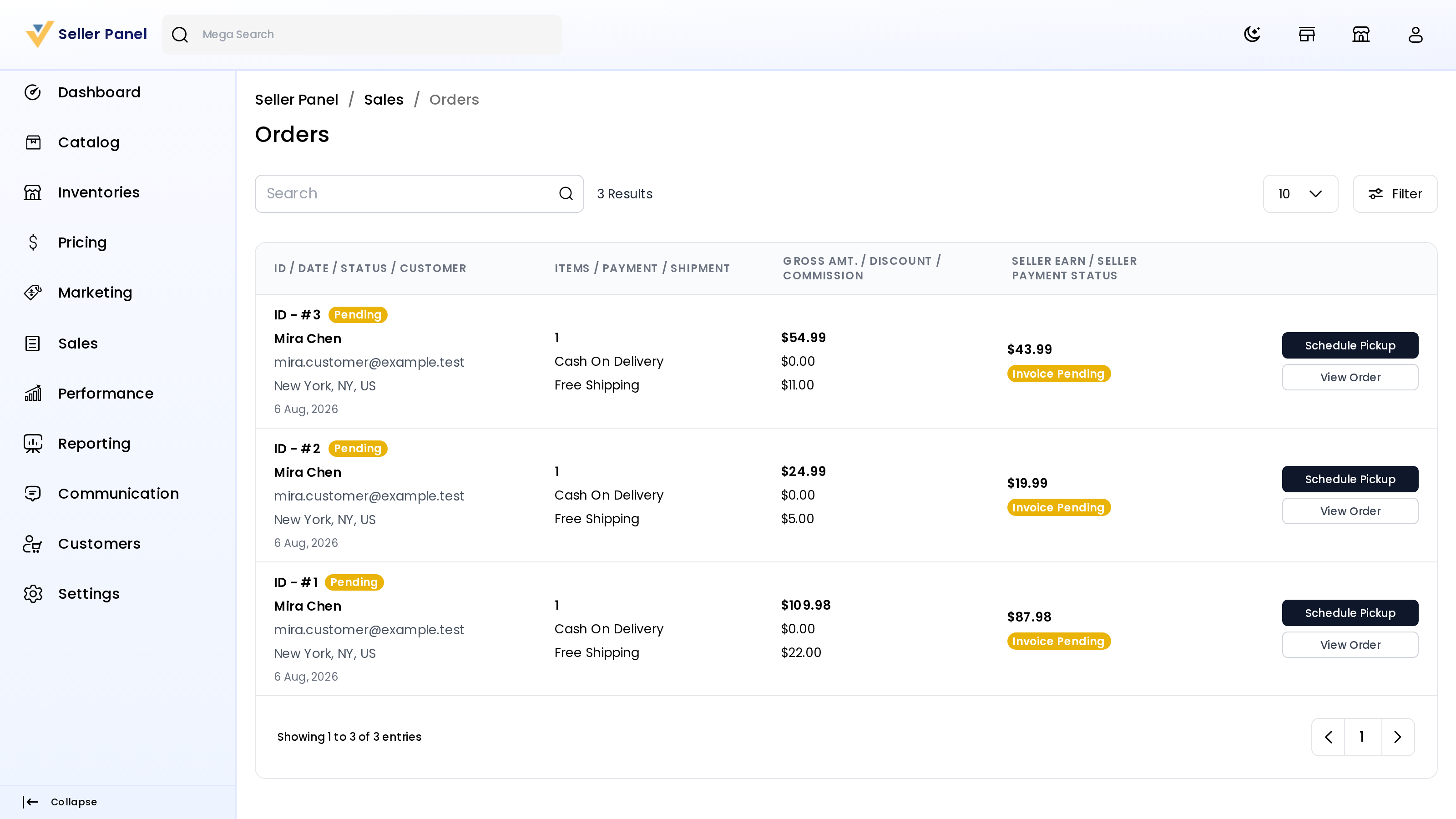
Each row shows:
- Id / Date / Status / Customer — the order number and date, the status of your part of the order, and the customer's name, email and location;
- Items / Payment / Shipment — how many products, the payment method and the shipping method;
- Gross Amt. / Discount / Commission — the value of your products, the discount and the store's commission;
- Seller Earn / Seller Payment Status — what you earn from the order, and where its payment stands. The payment status is shown only with the Payment Request permission. See Payment statuses.
The buttons on a row show what the order needs next: Schedule Pickup, Print Label, Request Payment, Transaction or View Order.
The customer's email and location are masked when the store doesn't let sellers see customer details.
Order statuses
| Status | What it means |
|---|---|
| Pending | The order has just been placed. |
| Processing | Some of your products are invoiced, shipped, cancelled or refunded. |
| Completed | All your products that weren't cancelled or refunded are invoiced and shipped. A part with any refund stays Processing. |
| Canceled | All your products in the order are cancelled. |
| Closed | All your products are refunded or cancelled. |
View an order
- Go to Sales >> Orders.
- Click View Order on the order.
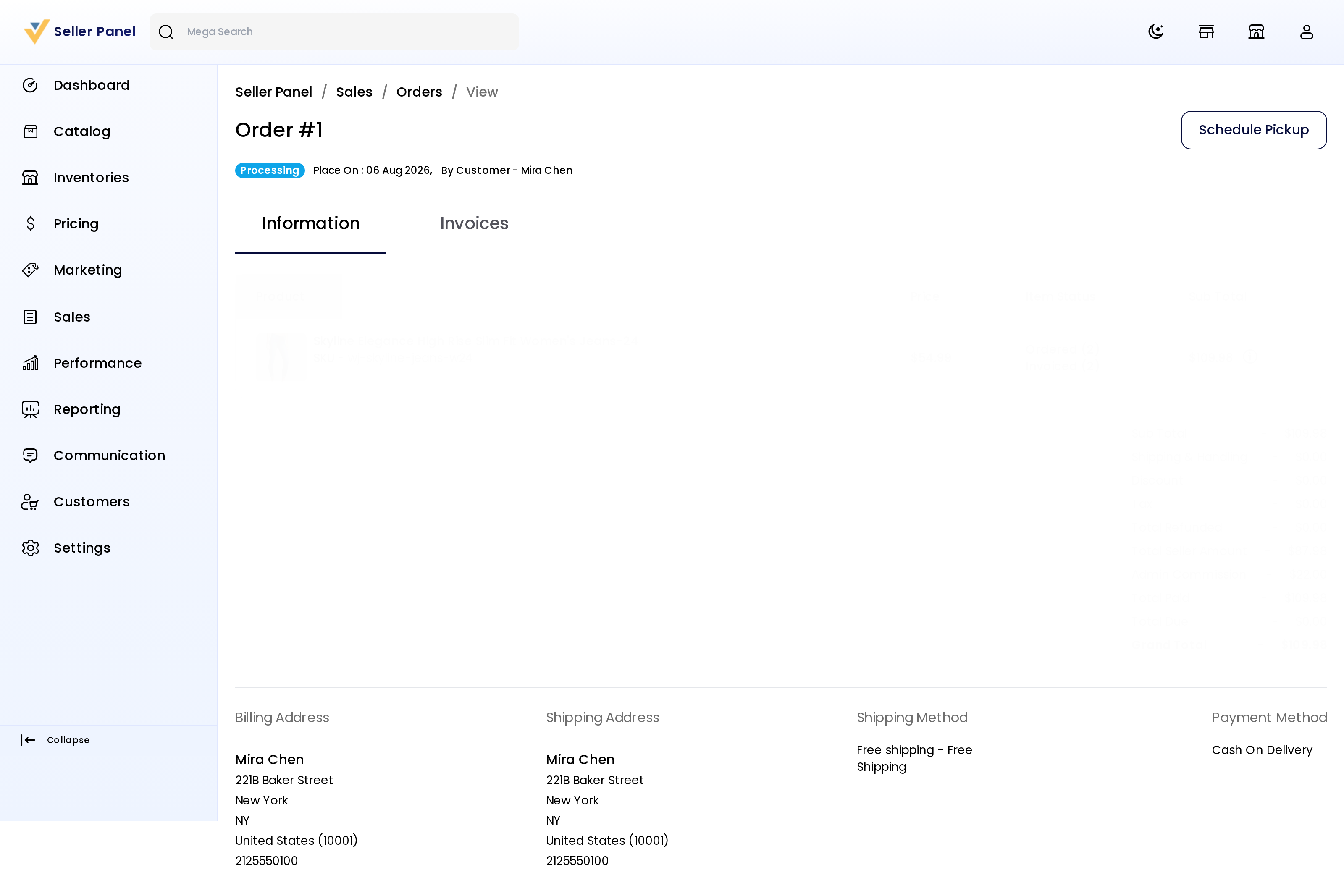
The Information tab lists your products with their price, what has been ordered, invoiced, shipped, refunded and cancelled, and each product's subtotal. Click the info icon next to a subtotal to see its discount, the store's commission and the tax.
Below the products are the order totals, including Total Seller Amount and Admin Commission. When the store lets sellers see customer details, the billing and shipping addresses and the shipping and payment methods are shown too.
The Invoices, Shipments and Refunds tabs appear once there is something to show.
Create an invoice
- Open the order with View Order.
- Click Invoice.
- In Create Invoice, enter the quantity to invoice for each product. You can invoice part of the quantity, but at least one quantity must be more than 0.
- Click Create Invoice.
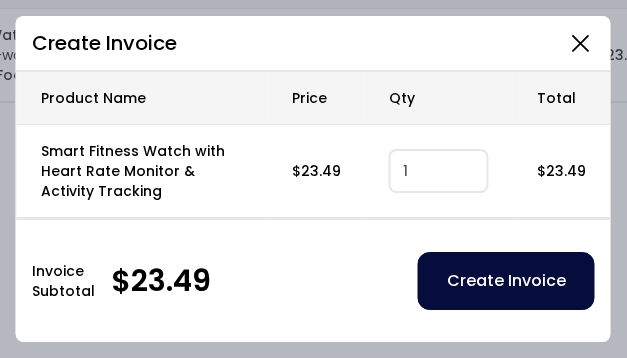
You'll see Invoice created successfully. To download an invoice, open the Invoices tab and click Print.
Ship the order
Click Schedule Pickup on the order row or on the order page. See Shipments & Carriers.
Cancel your part of an order
- Open the order with View Order.
- Click Cancel.
- Confirm.
Your products that aren't invoiced yet are cancelled and their stock is returned. Invoiced products can't be cancelled; the store admin refunds them instead. The customer receives an Order Cancellation Confirmation email, with a copy to you and the store admin. The customer's whole order is cancelled only once every seller's products in it are cancelled.
Cancelled products count towards your cancellation rate in Account Health.
Refunds
Sellers can't refund an order. The store admin issues refunds, and they then appear on the order's Refunds tab.
After any refund, even a partial one, the order's Seller Payment Status shows Refunded, and the order can no longer be requested for payment.
Get paid
When your part of an order is Completed, click Request Payment on its row. See Payment Requests & Payouts.
Emails
- You receive a New Order Confirmation email for every new order with your products.
- The customer receives a cancellation email when you cancel.
- When the store sends shipment emails, the contact email of the inventory source you ship from receives a New Shipment Confirmation email.
You don't receive emails for invoices or refunds.
For the admin
Go to Marketplace >> Sales >> Orders to see every seller's part of every order. An order with products from two sellers has two rows. Each row shows the order, the customer, the amounts and commission, and the Shop, Seller and Earn.
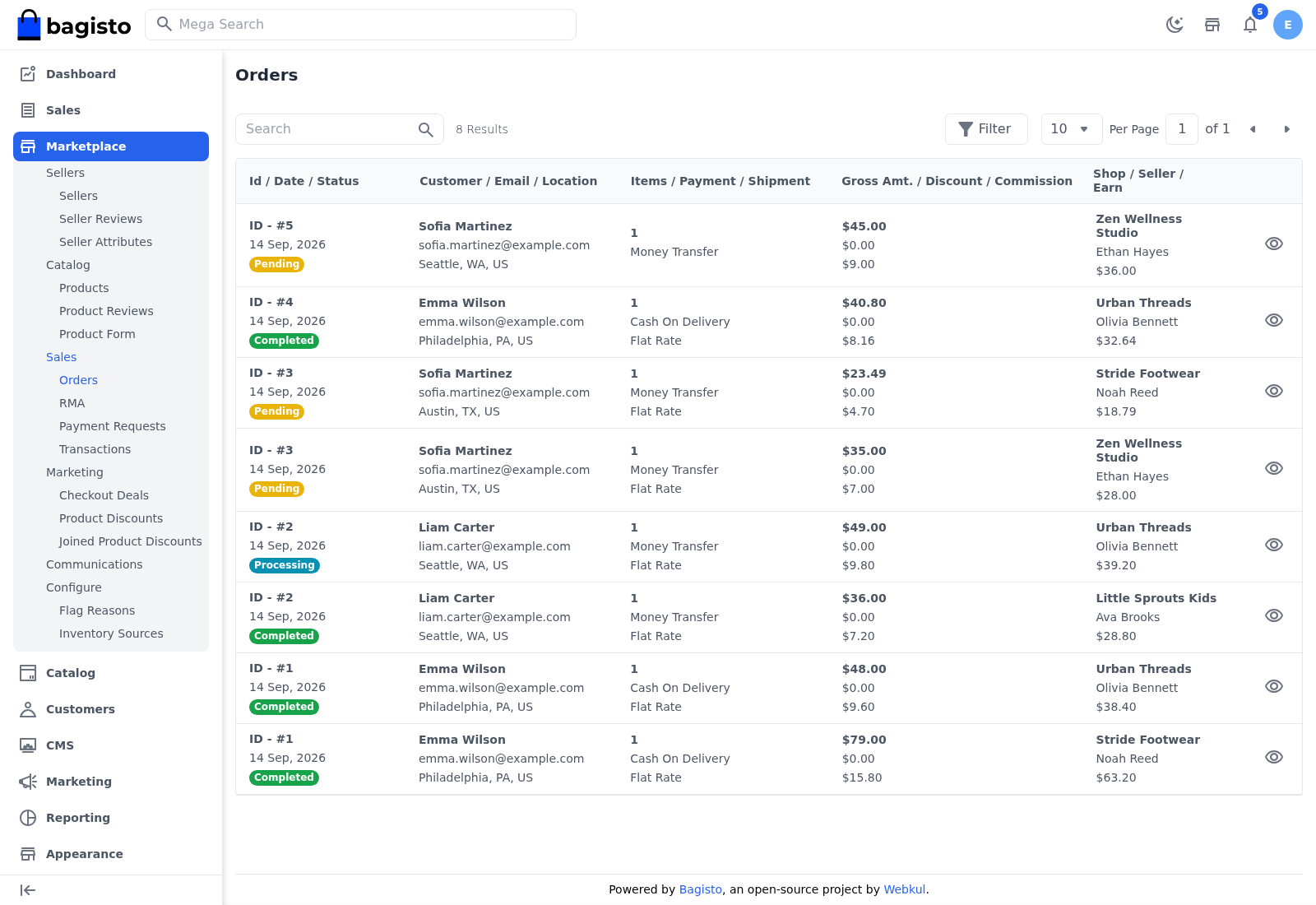
Click the view icon to open the whole order in Sales >> Orders. There you can invoice, ship and refund the order as usual. When you ship a seller's products, only that seller's inventory sources are offered. Invoices, shipments and refunds you create there also appear in the seller's view.
Settings and permissions
- Can Create Invoice, Can Create Shipment, Can Cancel Order and Can View Customers in Sellers settings decide which buttons and details sellers see.
- Team members need Orders, with View, Cancel, Invoice, Print Invoice, Shipment and Payment Request as needed.
- Admins need Marketplace >> Sales >> Orders to see the list, and Sales >> Orders with View to open an order.